
Hiring your first few workers is an exciting step for any small business. It usually means the workload is growing and there is enough business coming in to bring other people on board.
Then the payroll questions start.
One of the first things you have to figure out is whether someone should be treated as a W-2 employee or a 1099 independent contractor. It may seem simple but it is not. Worker classification can get confusing, especially when a person's work arrangement is vague.
Your decision to classify as an independent contractor vs employee can affect how you handle payroll compliance, tax withholding, recordkeeping, and so on. When it comes to W-2 vs 1099, the actual working relationship matters.
W-2 vs 1099: The Basic Difference
W-2 Worker:
- They are an employee of your business.
- Their wages are processed through your payroll
- Your business is responsible for withholding applicable taxes
- You also handle the related employer tax obligations.
1099 Worker:
- They are an independent contractor.
- They provide services to your business rather than becoming part of your employee workforce.
- In most cases, you do not withhold regular federal income tax, Social Security, or Medicare taxes from payments made to them.
- The contractor is generally responsible for their own income and self-employment taxes.
Independent Contractor vs Employee: What Does the IRS Consider?
This is the part business owners need to pay close attention to. Calling someone a contractor in a written agreement does not automatically make them an independent contractor. The IRS considers the facts of the relationship and how the work is actually performed. Incorrect classifications can result in IRS audit risks.
There are three broad areas to consider.
The first is behavioral control which looks at:
- How much control does your business have over the person's work?
- Do you determine when they work or explain in detail how a task should be completed?
- Do you provide training or instructions about the process?
The first is behavioral control which looks at: - Does the worker have their own business expenses?
- Do they provide their own tools and equipment?
- Can they make a profit or potentially experience a loss based on how they operate?
Finally, the relationship itself.
- Is the work ongoing?
- Does the worker receive employee-type benefits?
- Are they performing a service that is a regular part of your business?
There is no single question that determines the answer. Instead, you need to look at the relationship as a whole. That is why it is worth thinking through worker classification before payments begin rather than trying to fix the issue later.
Payroll Taxes Are a Major Difference
The tax side is where the distinction between employees and contractors becomes especially important.
With a W-2 employee, your business generally withholds federal income tax based on the employee's Form W-4. You also generally withhold the employee's share of Social Security and Medicare taxes and pay the employer's matching share. You also need to track tax payment deadlines.
Depending on where your business operates, there can also be federal unemployment tax and state or local payroll requirements.
A properly classified contractor is handled differently.
Generally, you do not withhold federal income tax, Social Security, or Medicare taxes from payments for the contractor's services. Instead, the contractor is responsible for dealing with their own tax obligations.
Employees become part of your regular small business payroll, while contractor payments are generally handled outside the normal employee payroll process.
W-2 and 1099 Forms
The forms themselves are fairly easy to understand once the worker has been classified correctly.
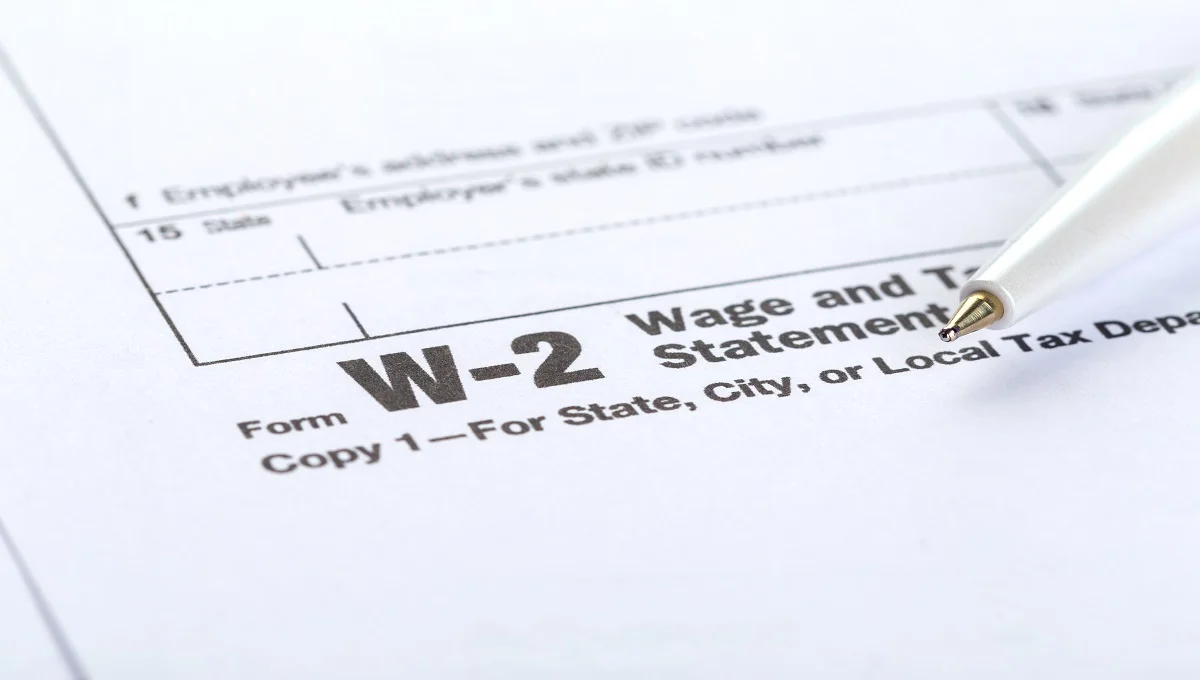
Employees generally receive Form W-2at the end of the year. The form reports their wages and applicable taxes that were withheld from their pay.
For qualifying independent contractors, businesses generally use Form 1099-NEC to report applicable nonemployee compensation.
It is also smart to get a completed Form W-9 from a contractor before you start making payments. That gives your business the information needed to properly identify the contractor if you later need to prepare an information return.
Good and clean recordkeeping makes a noticeable difference here.
If you regularly work with contractors, it is also worth having a process for reviewing those payments before year-end. This 1099-NEC filing checklist can help you keep track of the paperwork and important filing steps.
Common W-2 and 1099 Mistakes
Some worker classification mistakes are surprisingly easy to make such as:
- A common assumption is that anyone working part-time is automatically a contractor. That is not the case. A person can work only a few hours each week and still be a W-2 employee.
- Being paid by the hour does not, by itself, determine whether someone is an employee or an independent contractor.
- Do not rely too heavily on a written agreement. Contracts are useful, but the actual working arrangement still matters.
- There is also the temptation to classify workers based on cost. A contractor arrangement can sometimes appear less expensive because the business is not handling the same payroll taxes and withholding. If the facts point toward an employment relationship, the worker should generally be treated as an employee.
It is much easier to get the classification right at the beginning than to untangle payroll and tax records later.
What Payroll Compliance Involves
Once you have employees, payroll tax filing becomes something you deal with regularly.
There are wages to calculate, deductions to track, taxes to withhold, records to maintain, tax deposits to make, and payroll returns to file. At the end of the year, there are additional reporting requirements.
For a business with only one or two employees, this may not seem overwhelming. Add several more employees, different pay rates, benefits, bonuses, or workers in multiple states, and the workload can grow quickly.
That is one reason many business owners use payroll software or professional payroll processing services.
The point is not simply to make payday easier. A good payroll process helps keep employee records, calculations, tax withholding, reports, and filings organized.
For a business owner who would rather focus on customers and operations, payroll processing services can take much of the repetitive payroll work off their hands.
What Small Businesses Should Know About 1099 Workers
Contractors may not be part of your regular employee payroll, but that does not mean you can ignore the paperwork. Consider the following:
- Start by collecting a W-9 and keeping it with your business records.
- Make sure invoices and payments are recorded accurately throughout the year.
- Review contractor payments periodically rather than waiting until tax season.
- At the year end, determine which payments are subject to 1099-NEC reporting and make sure the required forms are prepared and filed on time.
A little organization during the year can save hours of work later.
When Does Payroll Outsourcing Make Sense?
Handling payroll yourself can be perfectly reasonable when your business is small and everything is fairly straightforward.
The challenge is that things tend to change. You hire another employee. Someone gets a raise. Benefits are added. A new deduction comes up. You start working with contractors. Maybe you hire someone in another state.
Before long, payroll is no longer a quick task you handle every couple of weeks. This is where payroll outsourcing for small businesscan start to make sense.
Outsourcing payroll does not mean giving someone else control over your business. You still decide whom to hire, how much to pay, and how you structure your workforce. The service simply takes care of much of the administrative work surrounding payroll.
Depending on the provider, that can enable the move from manual payroll to automated payroll, payroll calculations, direct deposits, tax withholding, payroll reports, and payroll tax filing support.
Small Business Payroll with AccountiPro
The W-2 vs 1099 question is not really about choosing a form. It starts with understanding the relationship between your business and the worker. The best time to sort out worker classification is before you start paying someone, not after a tax problem appears.
While this may seem straightforward, it could be confusing with a larger workforce. If payroll is taking more time than it should, it could be time to outsource. That is where AccountiPro comes in.
We take off the stress of worker classification, payroll recordkeeping and payroll tax compliance. For a growing company, that can free up a surprising amount of time.
Book an appointment with us now to understand more on how we can help your business with payroll and other services.